
Ildiana Tours travel website case study
Ildiana Tours originally began as a clear and inspiring travel website. During development, however, it quickly became clear that the task was not simply to design a few static destination pages. The site needed to bring together different partner feeds, frequently changing prices and departure dates, several types of offers, a large image library and personalised enquiries in one consistent experience.
The first published version handled 123 pages, 48 destinations, 64 manually curated offers and almost 750 optimised images. The project continued to grow, adding further partner data sources, structured import workflows, large quantities of dynamic offers and automated checks.
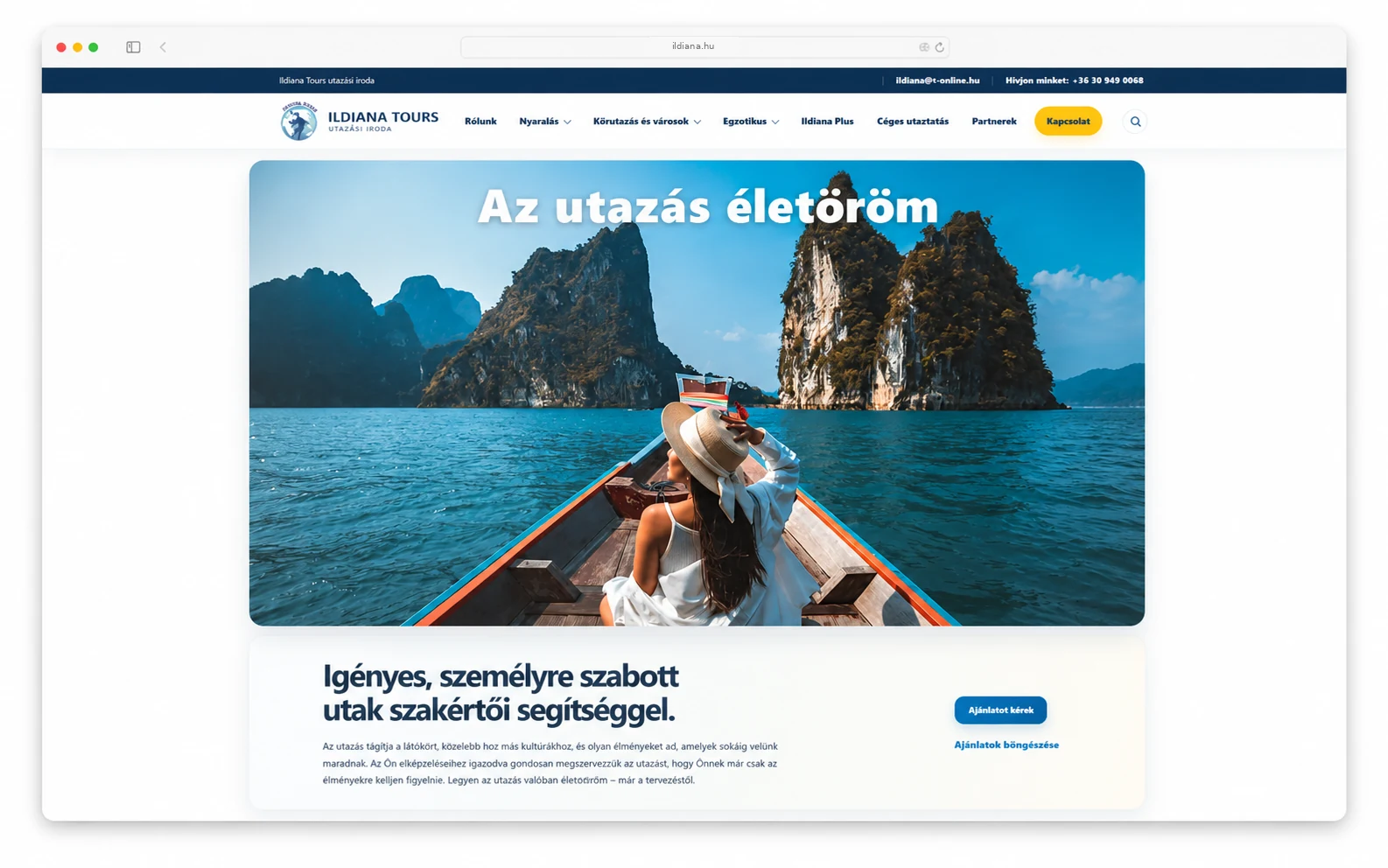
In brief: the result was not a one-off brochure website, but an expandable travel content and enquiry platform. Behind the scenes, data importing, normalisation, image processing, source management, error filtering and automated checks work together. Visitors simply see an intuitive way to browse offers and make enquiries.
The real brief: bring order to a constantly changing range of offers
Travel offers do not come with uniform product data. A hotel package, a multi-day tour, a city break and an exotic holiday each require different information. Partner descriptions, prices, durations, images and names varied in length and structure, so a reliable website could not be built by simply copying them across.
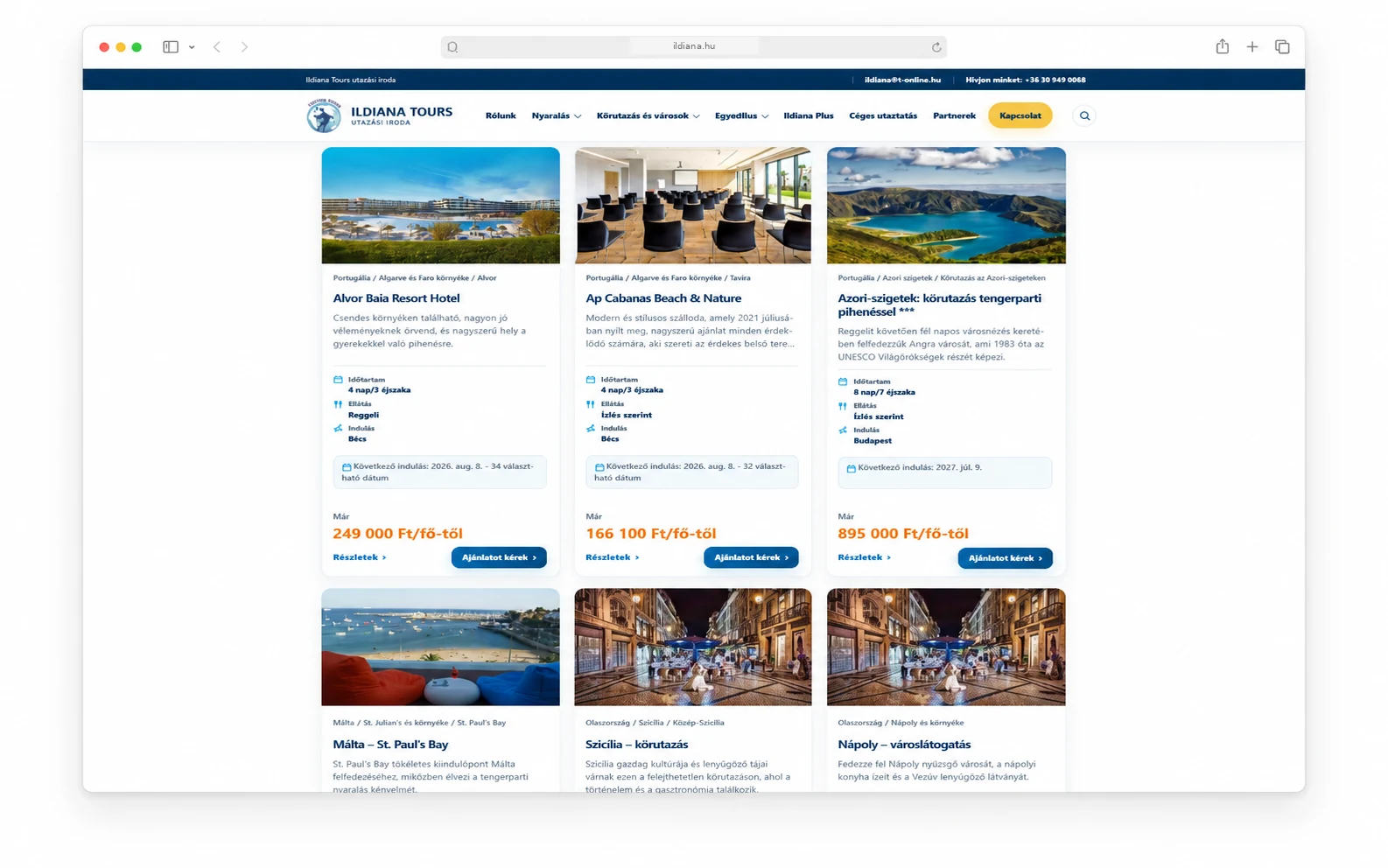
The goal was to help visitors quickly browse by country, region or travel type, while presenting every offer according to consistent principles: an understandable title, the correct destination, a headline price in forints, a concise summary, a detailed description, relevant images and a clear enquiry call to action.
How a manually built website became a complex platform
The first phase established the structure, visual system and manually edited destination and offer pages. Later, much larger datasets from several partners needed to be incorporated without losing the original navigation, country pages and user journeys.
This fundamentally changed the task. The website now had to process and classify large numbers of records, filter duplicates, generate pages and cards, and handle updated prices and departure dates, rather than merely display content.
Development therefore became iterative: each new data source required checks of categorisation, excluded offer types, pagination, content quality and whether every new offer appeared on the right listing page.
Partner data, XML imports and normalisation
The platform handles several kinds of sources: manually curated content, descriptions extracted from documents, image packages and XML data with different structures. These could not be imported blindly with one template because field names, dates, price formats, hotel types and image references varied by partner.
The import workflow therefore has several stages: reading data, mapping fields, assigning destinations, normalising prices, generating slugs, processing images, removing duplicates and validating required fields. Visitors should see only clear, consistent and checked content.
Offers from different sources appear in one consistent interface, while the platform retains the original source relationships needed to manage them behind the scenes.
Information architecture and different offer types
The original navigation and country structure were preserved, with imported content added beneath them. Where an offer selection grew large, pagination made browsing easier; where distinct regions mattered within a country, additional filters or switches divided the listing.
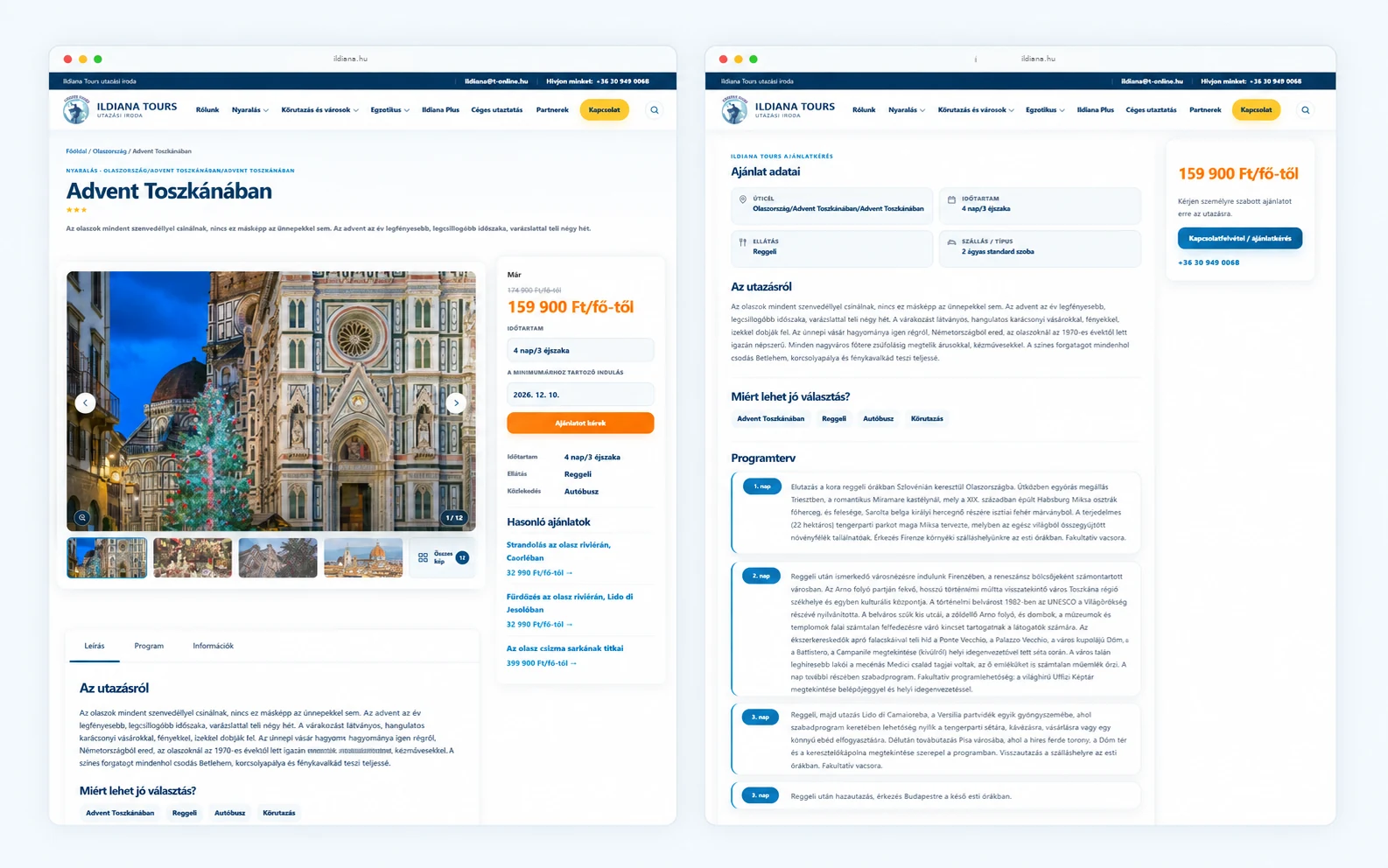
Hotel offers and multi-day tours share a visual foundation without being forced into the same content template. Accommodation pages emphasise rooms, board, location and galleries, while tours focus more on daily itineraries, transport, duration and participation terms.
Breadcrumbs, extensionless URLs, category pages, search and internal links all help visitors and search engines understand where an offer belongs within the platform.
Content and image management: more than copying data
A substantial part of the content work was quality assurance. We had to identify inaccurate or misleading copy, offers assigned to the wrong country, duplicate hotels, leftover technical notes, incorrect prices and descriptions that read more like import instructions than customer-facing content.
Image processing was similarly involved: choosing the right cover, limiting galleries, replacing missing photos, removing duplicates and creating optimised WebP versions. Listing cards need appealing, recognisable images, while detailed pages need galleries that really show the relevant property or itinerary.
Long descriptions were condensed into short, informative summaries for consistent cards. This prevents listing pages from becoming walls of text while helping visitors understand an offer before clicking.
Pre-filled enquiries and a secure email workflow
This website is not an online booking engine. Travel prices and availability change quickly, so the more appropriate business approach is to let visitors request a personalised quote with their chosen offer details already filled in.
The call to action opens the contact page with the selected offer's key details. Visitors can specify their departure date, numbers of adults and children, and any special requirements. Submissions use secure server-side validation and spam protection, and the visitor receives a confirmation.
It is not the flashiest feature, but it is essential: the website does more than inspire visitors — it provides a practical, traceable sales enquiry process.
Mobile UX and visual design system
The blue-and-white visual system needed to convey both the excitement of travel and the reliability of an established agency. Alongside large images and vivid highlights, the priorities were readable content, consistent calls to action and stable card layouts despite varying text lengths.
The mobile version required several dedicated refinement rounds. The header, search field, hamburger menu and dropdowns must not overlap; long country lists, filters, offer cards and itinerary descriptions must also remain usable on small screens. Button order, icons, checkboxes, image crops, safe areas and excessively long duration or price fields received their own fixes.
The aim was not merely to compress the desktop site, but to make the entire journey quick and easy on mobile: select a destination, open an offer, read the details and request a quote.
Custom PHP development and technical SEO
The platform uses a custom PHP structure, shared components, versioned assets and separate import tools. Shared logic, URL handling, dependencies and import stability were all refined over several rounds of development.
The import process needed its own performance improvements. Processing became incremental, making updates more reliable even with large datasets and many offers changing at once.
Every important page has a unique title, meta description, H1, canonical URL, structured data and internal links. The sitemap reflects the actual public structure, images use responsive sizing and descriptive alt text, and outdated URLs are given 301 redirects where necessary.
I explain the architecture of custom, content-heavy websites in more detail on the website development service page, and discuss project budgets in the website design pricing guide.
Quality assurance, audits and automated checks
For a platform of this size, manually opening a few pages is not enough. Dedicated quality checks look for missing or incorrect content, duplicates, image and URL problems, and discrepancies introduced during imports.
Logging and change detection help identify changes to source data, offer counts and required fields in time. Manual tests and automated checks together reduce the risk of errors going unnoticed on the public site.
Much of the project was therefore about long-term maintainability rather than one-off design: how to import new offers, track changes, find errors and deploy fixes without rebuilding the entire website for every update.
The outcome: an expandable travel platform, not a static catalogue
Ildiana Tours is now a searchable, mobile-optimised travel website built from multiple sources. Visitors see straightforward cards, detailed offers and a clear enquiry journey; behind the scenes are data imports, categorisation, image optimisation, source management, quality checks and technical SEO.
This project is particularly valuable in my portfolio because it demonstrates the role of information architecture, custom development, content processing, debugging and maintainability alongside web design. The platform grew by several orders of magnitude while remaining understandable to visitors.
It is a good example of why a business website's value goes beyond its appearance. Much of the real work is turning large amounts of changing, disorganised background data into a reliable, fast and customer-friendly experience.
View the live Ildiana Tours website
Frequently asked questions
Can visitors book directly on the Ildiana Tours website?
No. The site presents detailed offers and then guides visitors to a personalised quote request pre-filled with their chosen trip details. Final pricing and availability depend on the departure date, remaining places and partner terms.
How do offers get added to the platform?
The platform handles manually edited content, material processed from documents and partner datasets with different structures. Imports include standardisation, categorisation, price and image validation, and duplicate filtering.
What happens if a price or departure date changes?
The import and validation workflows are designed to refresh changing partner data. The public site displays current offers, while final bookable terms are always confirmed through a personalised quote.
Can the website be expanded later with new destinations and partner feeds?
Yes. The shared card, detail-page and import structures let new hotels, tours, regions and partner datasets be added without rebuilding the entire website.
Planning a similar website or a custom online platform?
I can help from information architecture and visual direction through data processing, responsive development, SEO foundations and the enquiry process to a complete, usable platform.
Start a projectPlanning a website?
The project planning guide helps you identify the goals, content, features and decisions needed for a clear project proposal.