
Website design pricing for businesses in 2026 – what affects the cost?
How much does a website cost, and what actually determines its development price? In this article, I explain realistic starting budgets, the difference between low-cost and professional solutions, and what to consider before requesting a quote.
For small businesses, the cost of a website depends on more than the number of pages. It also matters whether you already have a brand identity, how clear your offer is, whether copywriting is needed and how many trust-building elements, portfolio examples or contact paths the site needs.
A website is not an off-the-shelf product but a business tool: its price depends on why it is built, whom it needs to reach and what you expect it to achieve.

In brief: website pricing is not determined by how attractive the design looks, but by what problem it solves, whom it is for and what results you expect from it.
Why is there no fixed price for a website?
No two websites are exactly alike. They have different goals, audiences, content and expected results.
A simple brochure site and a lead-generating website serve different purposes. So instead of asking “How much does a website cost?”, the more useful question is:
“What do you want to use it for?”
What actually affects website pricing?
To discuss pricing meaningfully, it helps to look beyond the number of pages and a “nice design”. The real question is what work is needed to make the website easy to understand, build trust and encourage the next step (such as requesting a quote, calling or making a booking).
Website design prices at a glance
An exact quote is possible only once your requirements are known, so this table is a guide rather than a fixed price list. It shows the types of websites you might consider and what can change the final proposal.
| Website type | Best suited for | Starting project budget |
|---|---|---|
| Landing page / one-page website | A focused presentation of a campaign, a service or a new business, with an emphasis on enquiries. |
From HUF 100,000 depending on the content and sections required. |
| Brochure website | A 3–5-page website for a service provider or small business, structured around enquiries. |
From HUF 220,000 for 3–5 subpages with agreed content. |
| Custom WordPress website | An editable admin area, the foundations of a blog or portfolio and a more distinctive visual direction. |
From HUF 280,000 with an editable admin area and a more customised structure. |
| Fully custom-coded website | A custom HTML/CSS/JS/PHP business site with a more distinctive structure or specialised requirements. |
From HUF 350,000 for custom architecture and development requirements. |
| Website redesign | Modernising an existing site to make it clearer and more effective at generating enquiries. If you're unsure whether a refresh is enough, read about the 8 common signs that a website needs redesigning. |
From HUF 180,000 depending on the current site's condition and the extent of changes required. |
| Shopify store | A new or smaller online store with basic payment and shipping setup. |
From HUF 300,000 depending on product count, configuration and customisation. |
Extra items — such as additional subpages, copy refinement, SEO improvements, forms or external integrations — are included in a proposal only if they are genuinely needed. During the enquiry process, I help distinguish the essentials from features you do not need to pay for unnecessarily.
If you also want visual examples alongside these prices, my portfolio includes several website and online store projects. The main service options are also outlined on the services page.
If you're not sure which category your project falls into, I can help clarify what is genuinely needed and what would be unnecessary when preparing your quote.
Web design pricing: what does the project fee cover?
A The cost of web design is not just the cost of creating a visual mockup. For a business website, planning, content hierarchy, mobile usability and technical implementation combine to determine the project's real value. Two sites with a similar number of pages can therefore have very different prices depending on the strategic and custom work required.
A typical project fee may include the following work:
- structure and UX: sitemap, content order, calls to action and user journeys;
- custom visual design: an interface, typography and components aligned with your brand;
- responsive development: refinement across desktop, tablet and mobile;
- SEO basics: heading structure, metadata, internal linking and basic technical configuration;
- testing and handover: functionality, forms, basic performance and pre-launch checks.
If you want to understand the full project rather than just the price, the step-by-step website development guide walks you through the process.
What additional costs should you expect when building a website?
Some items fall outside the development fee and are not necessary for every project, so they should not automatically be included in the base price. These might include:
- domain and hosting;
- paid plugins or external service licences;
- copywriting, photography or other content production;
- special integrations, automations or custom features;
- ongoing maintenance and future improvements.
These should always be itemised separately so you can see which costs are one-off project fees and which may be optional future expenses. I also outline the main options on the custom website development service page.

- Strategy and UX – who it is for and which decision journey it guides visitors through
- Design level – template-based or custom visuals
- Content and structure – how carefully the page is organised and what it needs to communicate
- Technical solutions – speed, mobile optimisation and SEO foundations
- Conversion – calls to action, quote requests and trust-building
Together, these determine whether a website merely “exists” or actually works for your business.
When considering price, look beyond page count to the website's business role: will it only provide an online presence, or actively support decisions and enquiries? I discuss conversion considerations in the article on common mistakes in effective web design.
Budget website vs. professional website
The price difference is not accidental. It generally reflects:
- Budget website: quick delivery, template-based solutions, minimal strategy
- Professional website: considered structure, goal-focused content, consistent design and better UX
A professional website is not only attractive but also clear, trustworthy and converts visitors. That is what can make it worthwhile over the long term.
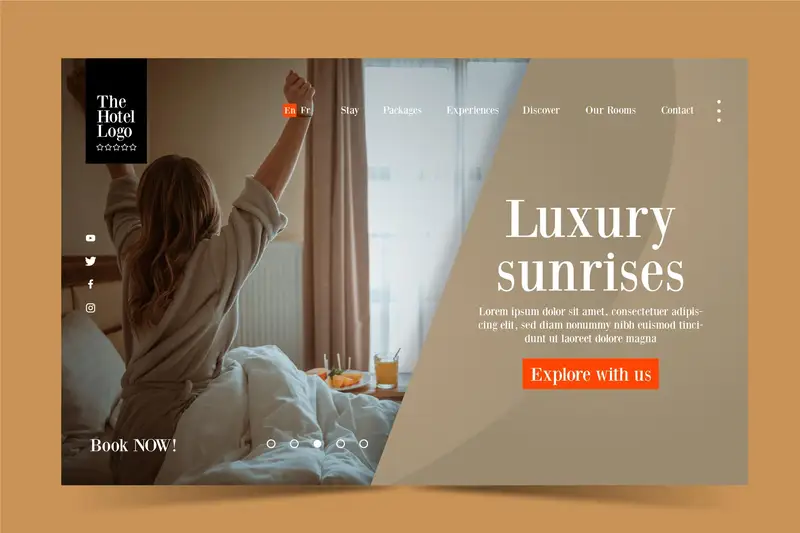
When should you view it as an investment?
If your website:
- it needs to generate customers
- it needs to position your brand
- you want to operate at a higher price point
- you do not want to have to convince every prospect individually
…then your website is not just an expense but an investment. A well-structured site does some of the work for you: visitors can quickly understand what you do, whom you help and why they should work with you.
Want to know what your project really needs?
A short consultation can clarify which kind of website would best serve your goals and what level of investment makes sense.
If you also need brand identity foundations alongside the website, the project involves designing a more cohesive visual system, not just an interface. The article on the brand identity design process is.
may be a useful related read.
How do I prepare a website quote? For me, a quote is not a template but a considered proposal
- . The aim is to help you understand what you will receive, why you need it and how the site will work for your business.
- I learn about your goals and target audience
- We discuss features and the necessary site structure
- I propose a UX, content and implementation approach
You receive a clear, itemised quote why the price is what it is — and what is included. If you also want to know what happens after accepting the proposal, the complete website development guide covers the brief, structure, design, development, testing and handover.
Store pricing depends especially on the complexity of product pages, categories, the cart and checkout journey, and trust-building elements. If you're planning an online store, see the guide to online store structure and, for a concrete example, the Shopify store case study. The structure of a live premium project is covered in the Office Art & Design Shopify store case study explains.
FAQ
Why do I provide starting prices instead of fixed package prices?
Because even the same type of website can be simple or complex: page count, the state of the content, required features, the uniqueness of the design and the delivery deadline can all differ. The prices are therefore a guide; the final proposal is based on your specific brief.
Can a website be built on a smaller budget?
Yes – in this case, what matters is that thoughtfully we need to decide what to simplify: features, page count, customisation, content or optional extras.
What additional costs should you expect when building a website?
Beyond the project fee, domain and hosting, paid licences, content production, special integrations and future maintenance may be separate costs. These should be itemised in the quote so there are no unexpected expenses.
Summary
Website pricing is not just a number, but a decision about how you want to represent your business online and what you expect the website to achieve.
If you would like a clear, straightforward quote for your own project, get in touch.
Planning a website?
The checklist helps you identify what content, images, brand assets and trust-building elements you may need before commissioning a website.