Brand identity design for businesses: elements, costs and process
Brand identity design helps your business create a professional, consistent and trustworthy impression. In this article, I will show you how a professional brand identity comes together step by step, from the logo and colors to typography and a complete visual system.
If your brand looks inconsistent, does not resonate with your target audience or simply fails to inspire enough confidence, a well-designed identity can offer tangible business benefits. A cohesive visual system helps customers recognize you, take your business seriously and feel more confident about contacting you.
Brand identity design is the process of creating a business’s visual system by coordinating its logo, colors, typography, graphic elements, imagery and brand guidelines. The aim is to make the brand recognizable, consistent and trustworthy across every touchpoint.
In brief: a brand identity is more than a logo. It is a cohesive visual system —a combination of colors, typography, style, graphic elements, imagery and guidelines that communicates the same message across every channel. This makes your brand recognizable, professional and trustworthy in the eyes of customers.
Brand identity design for companies, small businesses and new brands
Professional brand identity design for companies and small businesses goes well beyond creating an attractive logo. The goal is for your brand to be instantly recognizable, consistent and trustworthy across your website, social media, proposals and printed materials.
For small businesses and startups, a practical identity is especially important: it should be easy to use without requiring an overly complicated system, while providing a strong visual foundation for growth.
If you are also creating or refreshing a website, it is worth aligning your brand direction with its web design structure so the visuals, messaging and path to contacting you all work together.
What is brand identity design, and how does creating an identity help?
Brand identity design is the process of bringing your brand’s appearance together into a coherent system. The aim is for people to get the same impression wherever they encounter you—on your website, social media, business card, proposal or advertisement: consistency, professionalism and reliability.
Many people focus only on the logo, but in reality it is just one part of a brand identity. What makes a strong identity is that every detail works together: colors, typography, shapes, icons, imagery, graphic motifs and the tone of communication.
A professional brand identity is not decoration for its own sake. A good identity helps differentiate your business from competitors, supports sales, builds trust and makes it easier for customers to remember you.

Brand identity elements: what makes up a complete identity?
A complete brand identity consists of more than a logo. Its brand identity elements work together to form a visual system that makes a business recognizable, cohesive and professional. The more consistently these elements appear on your website, social media, proposals and printed materials, the stronger your brand image becomes.
1. Logo and logo variations
The logo is one of the most important elements of a brand identity, but it does not constitute a complete identity on its own. A well-structured system includes a primary logo, simplified logo, icon version, variants for light and dark backgrounds and, where needed, a black-and-white version.
2. Color palette
Brand colors define a business’s mood and visual character. An identity typically includes primary and secondary colors, accent colors, background colors and contrasting colors. Together, these keep your website, social posts, proposals and other graphics consistent.
3. Typography
Typography has a major influence on whether a brand feels modern, premium, friendly or technology-focused. During brand identity design, it is useful to establish separate font rules for headings, paragraphs, buttons, highlights and graphic materials.
4. Graphic elements and visual motifs
These may include icons, patterns, lines, shapes, textures, illustrations or bespoke graphic treatments. They give the brand an additional visual character that makes it feel distinctive and recognizable rather than generic.
5. Imagery
Brand identity also determines which photographs, illustrations and visual moods suit your business. A premium service, a creative brand and a technology company each call for a different visual language.
6. Brand guidelines
Brand guidelines help the visual identity remain consistent over time. They can cover the clear space around the logo, color codes, font usage, prohibited logo treatments and rules for applying the identity across different media.
Brand identity design for businesses: when should you invest in it?
Brand identity design is especially valuable when a business wants to appear more professional, reliable and recognizable. It is not only for startups: established businesses can also outgrow their original logo, colors, website or visual identity.
Consider brand identity design if:
- you are starting a new business and want to make a strong first impression,
- your current logo or website no longer reflects the quality of your services,
- your visual presence is inconsistent across your website, social media and proposals,
- you want to develop a more premium, modern or trustworthy brand image,
- you want to reach a new audience or a higher price segment with your products or services,
- you are preparing to build a website and want the design to be not only attractive but also true to your brand.
A well-designed identity ensures that your business does not rely on a random collection of visual elements, but instead communicates through a consistent, recognizable and trust-building system.
1. Understanding your brand identity
Before creating any visual elements, it is essential to understand your brand’s core values and goals. Who is your brand for? What problem does it solve? How is it different from its competitors? What emotions do you want to evoke in your audience? These questions form the strategic foundation of the identity.
This stage often involves preparing a brand personality brief, target audience analysis and visual mood board to guide subsequent design decisions. The clearer the strategy, the stronger and more consistent the final result.
2. Logo design – the visual foundation
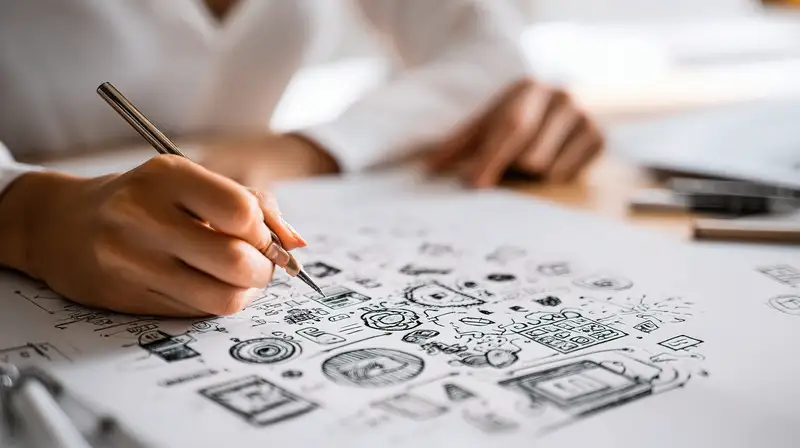
The logo is the central element of the identity: the brand’s visual signature. A well-designed logo should be simple, distinctive and timeless and work at small sizes, too: on mobile, as a favicon or profile photo, and on printed materials.
- Make it recognizable and legible at different sizes.
- Ensure that it works in color and black and white, on both light and dark backgrounds.
- Match it to your brand’s character, whether serious, friendly, premium, creative or energetic.
- Aim for lasting usefulness, not just a fashionable look.
What is the difference between logo design and brand identity design?
A logo design is one part of a brand identity, but it is not the same as creating a complete identity. A logo is an identifying mark: it helps people recognize a business, but it does not, by itself, determine how the brand should look across every channel.
Brand identity design is a broader system. It includes the logo, colors, typography, graphic elements, imagery and the rules that ensure the brand appears consistently on websites, social media, advertisements, proposals and printed materials.
Put simply, the logo is one of your brand’s symbols, while the identity is the complete visual system that makes the brand recognizable and distinctive.
3. Colors and typography
A colour psychology is one of the most powerful tools in brand identity design. Colors convey emotions: blue can suggest trust and stability, red energy and momentum, while green can suggest balance and a connection to nature.
Typography matters just as much: the character and legibility of your fonts strongly influence how people perceive your brand. It is usually worth choosing a primary typeface and a complementary typeface with clear rules for headings, body text, buttons, highlights and graphic materials.
If you would like to explore the feelings different shades can communicate, the article on color meanings and psychology illustrates the role of brand colors through specific examples.
Does your brand identity truly reflect the quality of your business?
If you are unsure whether your current visual identity makes the right impression on your audience, it is worth getting a professional assessment. A short consultation can quickly clarify which direction to develop it in.
4. Building a visual system
An identity becomes complete when its logo, colors and typography form a cohesive visual system. Supporting graphic elements are part of this, too: icons, patterns, shapes, button styles and a consistent direction for photography or illustration.
The point of the system is to make it easy to produce a social post, proposal, presentation or website while ensuring that the result always feels on-brand. This matters especially when you communicate across multiple channels or when a marketer, developer, printer or another external partner later works with your brand assets. If the identity is used regularly for campaign, social or print materials, my graphic design for businesses service carries this visual system through into everyday communications.
The same system should carry over to your website: good web design is not a separate visual concept, but the digital application of your identity. If you are also considering a website, the article on the principles of effective web design is closely related to this topic.
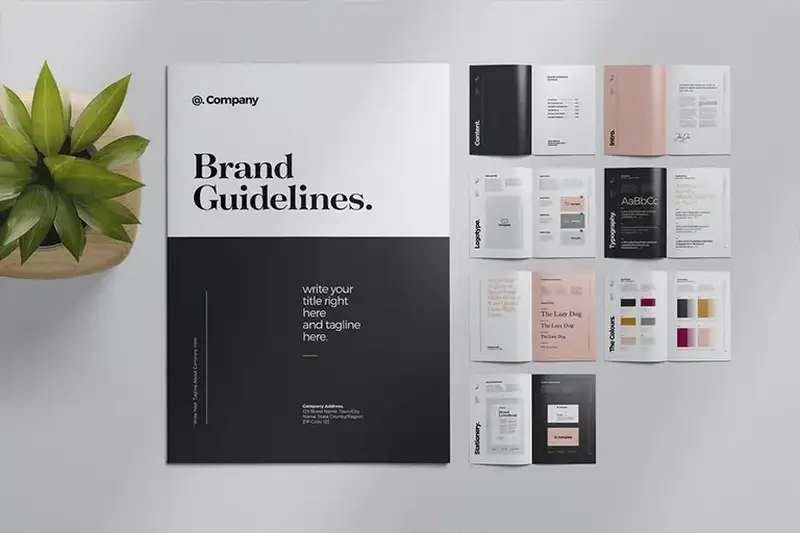
5. Brand guidelines
A brand guide brings together every rule, from logo usage to color and typography standards. It helps your brand remain consistent even when several people work on it: a marketer, developer, graphic designer, printer or content creator.
A brand guide may contain logo variants, color codes, typefaces, image guidelines, prohibited logo treatments, icon styles, social media templates and examples defining the visual mood of the brand.
6. Aligning digital and print branding
Modern brand identity design is not limited to print. Your website, social media, advertisements, email templates, proposals and presentations are all parts of the same brand. That is why digital elements such as buttons, banners, post templates and web design components must be as consistent as printed items such as business cards, leaflets, packaging and company documents.
A strong brand identity succeeds not only in a single mockup, but also when it is easy to apply in everyday use.
Brand identity design: pricing and key considerations
The cost of brand identity design depends on whether you need only a basic visual direction or a complete system with a logo, color palette, typography, graphic elements and brand guidelines. A smaller business can often start with a clean, streamlined identity, while a larger company may need a more detailed system adaptable to many channels.
The amounts below are starting project budgets, not fixed prices. Every quote is tailored to your needs, required deliverables and project scope, so you do not pay for elements you do not need.
| Brand identity package | Best suited for | Starting project budget |
|---|---|---|
| Logo design | Logo concept, refinement, color and black-and-white versions and essential exports. | From HUF 70,000 for a logo concept and essential exports. |
| Mini brand identity | Logo or logo refinement, color palette, typography direction and a simple visual overview. | From HUF 110,000 for a starter visual identity. |
| Small brand identity package | Logo variants, color palette, typography, brand elements and a simple brand guide PDF. | From HUF 160,000 for a more consistent business identity. |
| Complete brand identity | Logo system, basic social and print assets, additional brand materials and a more detailed brand guide. | From HUF 250,000 for a more comprehensive identity system. |
Pricing is usually influenced by:
- the depth of logo design and the number of logo variants,
- how extensively the color palette and typography system are developed,
- the number of custom graphic elements, icons or patterns,
- how detailed the brand guide needs to be,
- whether you also need web design, social templates or print materials,
- the project timeline and complexity.
Before requesting a quote, consider where your brand will appear: on a website, business cards, social media, proposals, packaging or advertisements. This helps identify which identity elements you actually need.
If the identity will form the foundation for a new website or online store, the price and level of implementation may be different. I cover this in more detail in the article about website design costs; for specific examples, take a look at my web design and brand identity portfolio may also be useful.
Quick checklist: how consistent is your brand identity?
- Do the same colors and fonts appear across every channel?
- Does your logo work at small sizes, such as a profile picture, favicon or mobile header?
- Do you have a consistent visual style for photography, illustrations or graphics?
- Does your visual presence look professional at a glance, or does it feel mismatched and inconsistent?
- Does your visual identity fit your target audience and price range?
- Do you have brand guidelines that a developer, marketer or printer could follow later?
Frequently asked questions about brand identity design
What kind of brand identity does a startup need?
For a startup, the most important thing is usually a usable foundation: a logo, colors, fonts, a few graphic rules and a visual direction that can be extended to a website, social posts and printed materials later.
What does brand identity design mean?
Brand identity design is the process of designing how a business looks. It includes developing the logo, color palette, typography, graphic elements, imagery and rules for using the identity.
What does a brand identity include?
A brand identity can include a logo and its variants, brand colors, typography, icons, graphic motifs, social media templates, business cards, a web design direction and a brand guide.
What is the difference between a logo and a brand identity?
A logo is one element of a brand identity. The identity is the complete system: colors, typography, graphic elements, imagery, guidelines and a consistent appearance across different channels.
When should you create or refresh your brand identity?
If your business has grown, you are targeting a new audience, your visual presence is inconsistent or your current identity no longer reflects the quality of your services, refreshing your branding can be a worthwhile investment.
How much does brand identity design cost?
The cost depends on the scope. A basic logo and color system will have a different price from a full identity with a brand guide, social templates, web design direction and print materials.
How long does brand identity design take?
It depends on the project scope. A basic identity can be completed more quickly, while a full system with guidelines and templates may require more consultation, research and design rounds.
Summary
Brand identity design is a strategic and creative process that shapes how people perceive your business. A consistent visual identity builds trust helps you stand out and communicate consistently over the long term.
A professional identity does more than improve your appearance. It also supports sales, builds brand recognition and helps customers take your business more seriously.
Would you like a more consistent, professional brand identity?
If your business no longer looks as good as the quality of work you deliver, it may be time to rethink your visual identity. I can help create an identity that works consistently across your website, social channels and printed materials. I have also summarized my related web design, branding and graphic design options on the services page.
Planning a website?
The checklist helps you identify what content, images, brand assets and trust-building elements you may need before commissioning a website.