Web design for small businesses: 7 mistakes that stop your website generating customers
If you have a website but it does not generate quote requests or enquiries, the cause is probably several smaller web design issues rather than one major mistake. In this article, I explain seven of the most common reasons a website fails to convert.
In brief: if your site looks good but does not generate enquiries, the issue usually is not the “design” alone but the user journey, trust-building and CTA calls to action.
Web design for small businesses: what should you focus on?
For any business website — whether it represents an emerging brand, a small business or a company going through a refresh — the goal is not to fill the page with eye-catching elements. Visitors should quickly understand the offer, trust the brand and find it easy to get in touch.
Effective web design brings together the brand identity, written content, visual hierarchy and contact journey into one coherent system. This matters equally for small businesses, medium-sized companies and growing firms.
If your core brand identity is not yet consistent, it is worth thinking through the visual foundations first, because the website will be built on that system.
What is effective web design, and why do so many websites underperform?
Effective web design is an approach that optimises not only appearance but also user experience, a navigation and conversions. Its goal is simple: visitors should quickly understand what you do, why they can trust you and how to get in touch with you.

Why do so many websites fail to attract customers?
In my experience, the same patterns recur in many underperforming websites:
- An unclear offer (what do you help with, and whom do you help?)
- No clear focus (too many messages, too many menu items, a disjointed page)
- Lack of trust (no portfolio, references, process, guarantees or human presence)
- Missing calls to action (no obvious next step, or the button is in the wrong place)
- Slow loading and an awkward mobile experience
The good news is that these issues can be fixed. Web design is not merely an art project; it is a business tool — and that should be the starting point for planning.
7 web design principles worth following
1. User-centred design
The website's primary purpose is to help visitors easily find what they are looking for. Key considerations include:
- Logical menus and clear navigation
- Easy-to-understand content hierarchy
- Calls to action that are immediately visible
If using the site is frustrating, even an impressive design will not be effective.
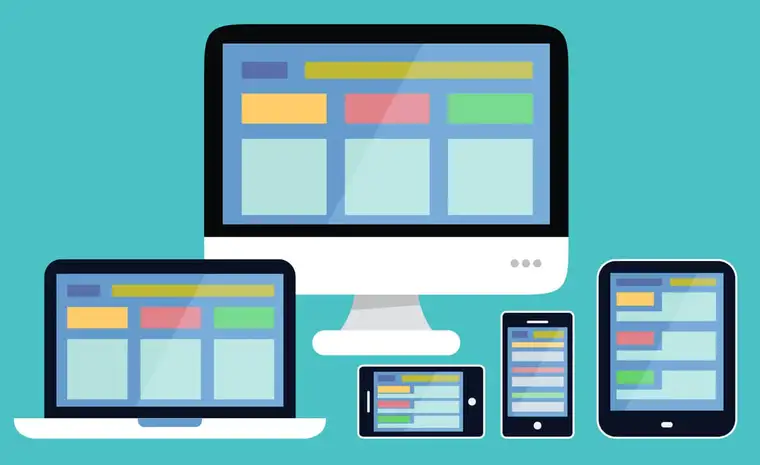
2. Responsive and mobile-friendly design
Today, many visitors arrive on mobile devices. Some tips:
- Flexible grid-based layouts
- Optimised images (WebP, correctly sized)
- Simplified mobile navigation
- Touch-friendly buttons (with adequately sized tap targets)
3. Visual hierarchy and focus
Colours, typography and layout help direct attention. Key principles:
- One main message per section (not “everything is important”)
- White space for readability
- High-contrast, consistent call-to-action buttons
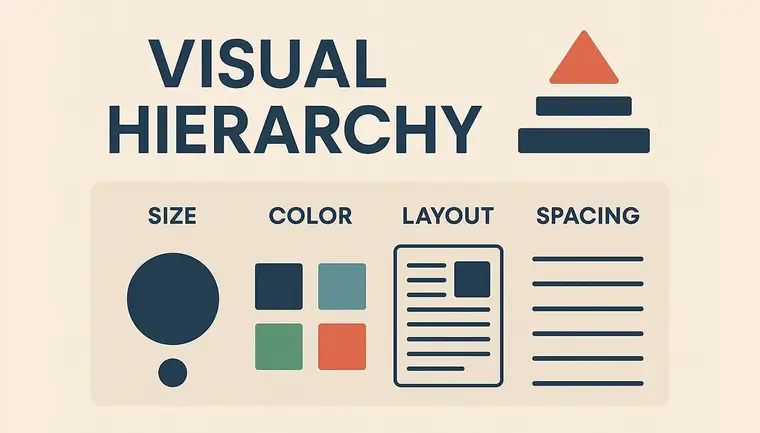
Colours and highlights are also part of this hierarchy: a good call to action does not work by being loud, but by guiding attention consistently. I explain this further in the article on colour psychology and brand colours.
4. Fast loading and technical foundations
Performance directly affects for UX and for SEO:
- Optimised images and media files
- Minified CSS and JavaScript
- Cache and compression (GZIP/Brotli)
A slow website loses visitors even if its appearance is perfect.
5. Building trust (often the missing piece)
Visitors do not make decisions based on looks alone. They need trust. Useful trust signals include:
- A portfolio and concrete examples (see my work)
- A short process overview (what happens between enquiry and handover)
- Easy-to-find contact details (email/phone)
- A human face and professional credibility (who builds the site and how they work)
Trust-building does not start with the website alone. If the logo, colour palette, typography and imagery do not work together, the website will be less convincing too. For a related guide, read the article on the steps of brand identity design is.
If several of these problems appear on an existing site at once, the key signs that it is time for a website redesign may help you decide when targeted fixes are sufficient and when a more substantial redesign makes sense.
6. Optimising content and navigation
- Short, clear paragraphs
- Well-structured sections (H2/H3), lists and quick answers
- Make the offer or service clear within the first 10 seconds
7. Conversion focus: calls to action, forms and the next step
When placing calls to action, consider which decision points visitors move through. A well-positioned button can often matter more than an eye-catching graphic.
- Place a call to action above the fold, beside the main message
- Include another call to action around the middle and end of the article
- Use specific button labels: “Request a quote”, “Free consultation”
Want a website that brings you customers?
Get in touch, and I will send you a clear, concise suggestion for making your website more effective for your business.
Quick checklist (2 minutes)
- Does the first screen make it clear what you do and whom you help?
- Is there an obvious CTA (call to action for a quote or contact)?
- Is it comfortable to use on mobile (menu, buttons and readability)?
- Does it build trust (portfolio, process and references)?
- Does it load in about 2–3 seconds without the layout jumping around?
Common mistakes that hurt conversions
- Too many menu items and competing directions → diluted focus
- Generic copy such as “quality and reliability” without concrete details
- Calls to action only in the footer → visitors get lost
- No explanation of “why choose you?” (what makes you different)
- A portfolio without context (what was the goal and what was the outcome?)
If the site is an online store rather than a brochure website, category pages, product pages and checkout structure are also essential to conversion. Read the article on online store structure for more guidance and the Shopify store case study I show you.
FAQ
Web design for small businesses: what is different?
A small business website needs a quickly understandable offer, trust-building elements and a simple contact journey. The aim is not an abundance of visual effects, but a clear experience that supports visitors' decisions.
How long does it take to build a website?
That depends on the content and number of pages. A clean brochure site is quicker to build; a more complex structure requires more discussion and planning.
What is the difference between a “pretty” and an “effective” website?
An effective website does more than look good: it helps people make decisions, builds trust and guides visitors towards the next step.
Is being mobile-friendly enough?
Mobile usability is the foundation. A site also needs focus, good content, trust signals and calls to action — these work together to generate conversions.
Summary
Effective web design is based on a balance of appearance and functionality. A user-centred, fast, responsive and trust-building website does not just look better; it also supports business performance.
If you want a website that attracts customers as well as looking good, get in touch.
Planning a website?
The checklist helps you identify what content, images, brand assets and trust-building elements you may need before commissioning a website.